Hertz Tesla: The Electrifying Intersection of Innovation and Legacy
The names Hertz and Tesla resonate deeply within the scientific and technological landscape, each representing pivotal breakthroughs that have irrevocably shaped our modern world. While separated by time and specific areas of focus, their contributions are inextricably linked, forming a powerful current that continues to drive innovation, particularly in the realm of electricity and wireless technology. This exploration delves into the fascinating synergy between Heinrich Hertz's foundational discoveries in electromagnetism and Nikola Tesla's visionary advancements in alternating current and wireless power transmission, revealing how their intertwined legacies have paved the way for the electric revolution we are witnessing today.
Heinrich Hertz: Illuminating the Nature of Electromagnetic Waves
Heinrich Hertz, a brilliant German physicist, provided the experimental validation for James Clerk Maxwell's groundbreaking theory of electromagnetism. In a series of elegant experiments conducted in the late 1880s, Hertz successfully generated and detected electromagnetic waves, proving their existence and demonstrating that light itself is a form of electromagnetic radiation. His meticulous work not only confirmed Maxwell's equations but also laid the essential groundwork for countless technologies that we now take for granted, including radio, television, and wireless communication.
Hertz's experiments involved creating oscillating electric currents that produced electromagnetic waves, which he then detected using a loop antenna. He meticulously measured the properties of these waves, including their speed, wavelength, and frequency, confirming their adherence to Maxwell's predictions. The unit of frequency, the hertz (Hz), is named in his honor, a testament to his fundamental contribution to our understanding of the electromagnetic spectrum. His discoveries opened an entirely new frontier in physics and engineering, setting the stage for the innovations that would follow.
Nikola Tesla: The Visionary of Alternating Current and Wireless Power

Nikola Tesla, a Serbian-American inventor, electrical engineer, and futurist, built upon the foundational understanding of electromagnetism established by figures like Maxwell and Hertz to revolutionize the way electricity is generated, transmitted, and utilized. His most significant contribution was the development and championing of alternating current (AC) systems over direct current (DC). Tesla's AC system, with its ability to be efficiently stepped up to high voltages for long-distance transmission and then stepped down for local distribution, proved to be far more practical and economical than Edison's DC system, ultimately winning the "War of the Currents" and forming the backbone of modern power grids worldwide.

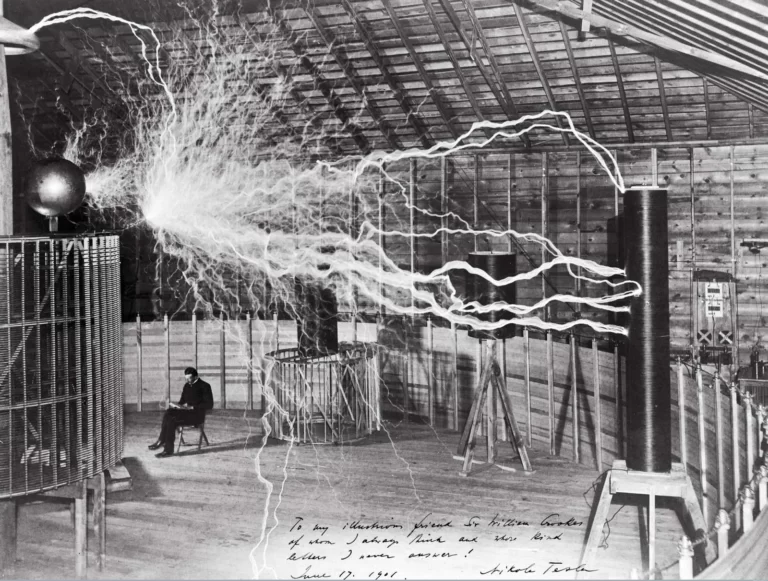
Beyond AC, Tesla was a prolific inventor with a remarkable vision for the future. He pioneered numerous advancements in areas such as wireless communication, radio control, and even concepts related to wireless power transmission. His work on the Tesla coil, a resonant transformer circuit, remains iconic and has found applications in various fields. Tesla's relentless pursuit of innovation and his belief in the potential of electricity to transform society were truly groundbreaking. While some of his more ambitious ideas, such as large-scale wireless power distribution, were never fully realized in his lifetime, they continue to inspire researchers and engineers today.
The Electrifying Connection: From Electromagnetic Waves to Electric Mobility

The connection between Hertz's discovery of electromagnetic waves and Tesla's advancements in electrical systems is profound. Hertz's work provided the fundamental understanding of the invisible forces that could be harnessed and transmitted wirelessly, a concept that Tesla passionately pursued. While Tesla's immediate focus was on power transmission and electrical machinery, his exploration of high-frequency currents and electromagnetic fields laid crucial groundwork for the development of radio communication, a direct application of Hertz's findings.
Fast forward to the present day, and the convergence of their legacies is strikingly evident in the rise of electric vehicles. The efficient transmission and distribution of electricity, made possible by Tesla's AC system, is essential for powering the charging infrastructure that supports electric mobility. Furthermore, the ongoing research and development in wireless charging technologies for EVs directly echo Tesla's early visions of wireless power transfer. The very name of the prominent electric vehicle manufacturer, Tesla, Inc., serves as a powerful tribute to Nikola Tesla's enduring impact on the field of electricity and his forward-thinking approach to transportation.

A Legacy of Innovation: Powering the Future
The contributions of Heinrich Hertz and Nikola Tesla are not merely historical footnotes; they are the foundational pillars upon which much of our modern technological world is built. Hertz's experimental validation of electromagnetic theory opened the door to the wireless revolution, while Tesla's innovations in AC power and his visionary pursuits in wireless technology continue to shape our energy systems and transportation. The electric revolution, with its emphasis on sustainable energy and wireless connectivity, stands as a testament to the enduring power of their intertwined legacies. As we move towards an increasingly electrified future, the names Hertz and Tesla will continue to symbolize the power of scientific discovery and the transformative potential of engineering innovation.
Comments
Post a Comment